
Macon County Criminal Court Records
A Macon County criminal court record is the court file for a prosecuted criminal case. The Clerk of Superior Court keeps Superior Court civil and criminal files, while Magistrate Court creates many early criminal records, including first appearances, preliminary hearings, bond matters, arrest warrants, and search warrants. The county clerk page says open cases can be searched for parties and proceedings, and closed cases can be viewed when the case number is known. It also says scanned images of filings are not displayed online because court filings can contain identity-theft risk factors.
Georgia uses Superior Court terminology. Macon County is in the Southwestern Judicial Circuit, which also includes Lee, Schley, Stewart, Sumter, and Webster counties. Superior Court is the general-jurisdiction trial court for felony criminal cases, divorce, title-to-land cases, equity cases, and larger civil matters. Magistrate Court is still important in criminal records because it issues arrest and search warrants, conducts preliminary hearings, and considers bond in many cases before a felony case reaches Superior Court.
The Macon County Magistrate Court overview identifies criminal functions such as warrants, preliminary hearings, summons, first appearances, and bond. Those events can explain why a record exists before a Superior Court indictment, accusation, plea, or sentence appears. For charge lists and charging changes alone, the Macon County arrest records and court charges page is the tighter reference; the full case file belongs here.
The Southwestern Judicial Circuit district attorney page identifies the prosecutor for Macon County felony cases.
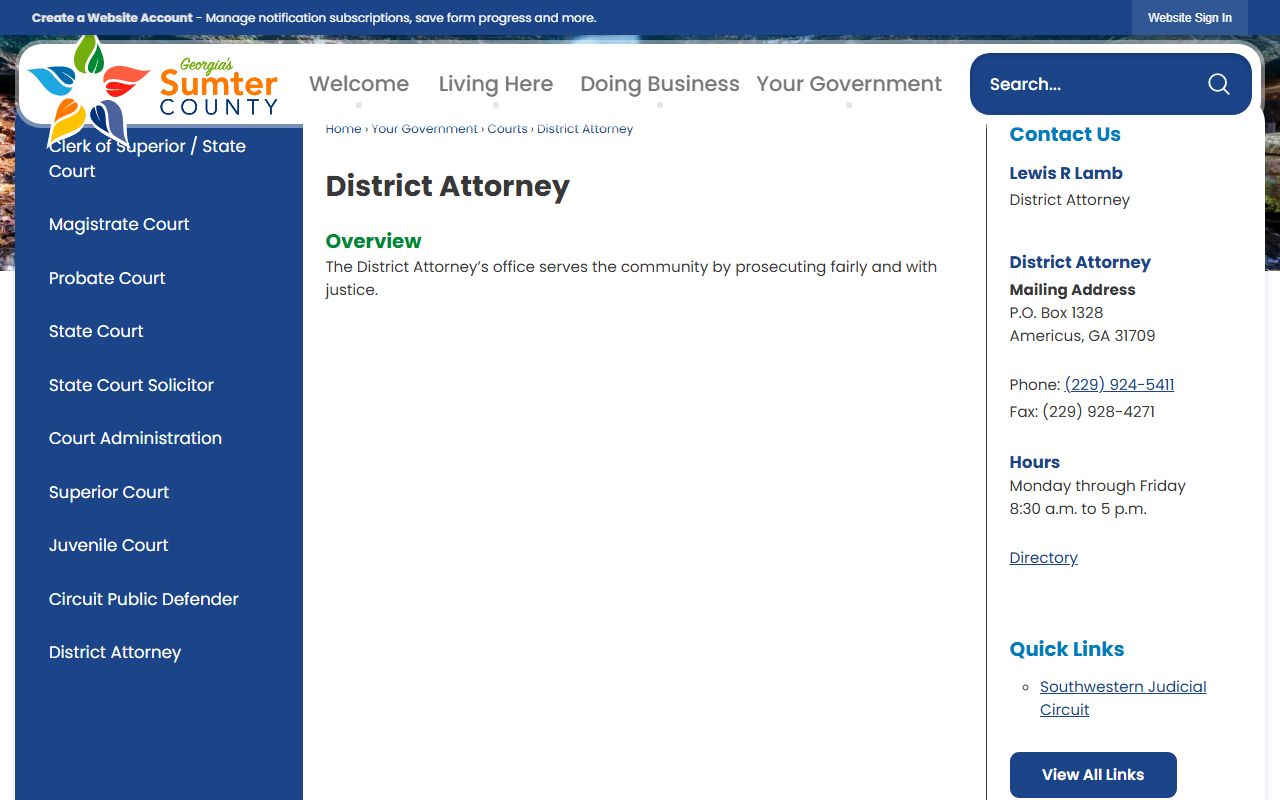
That circuit context matters because Macon County criminal court records often connect local Superior Court filings with a prosecutor whose main public contact is listed through the circuit.
Find Macon County Criminal Records
Macon County does not publish a single county-branded criminal case portal for every criminal record. The search path is custodian-based. Start with the Clerk of Superior Court for Superior Court criminal files, case numbers, party names, proceedings, dispositions, and copy requests. Use the clerk counter, phone, mail, fax, or open-records request when the online view is not enough. For early warrant, bond, and preliminary hearing events, use Magistrate Court. For incident reports or jail records tied to an arrest, use the Sheriff's Office records channel.
- Identify the court level. Felony prosecution and final criminal case files are generally Superior Court matters, while warrant, first-appearance, bond, and preliminary-hearing records may start in Magistrate Court.
- Gather the defendant name, case number if known, date range, charge, arrest date, and agency. Closed Superior Court files may require a case number.
- Ask the Clerk of Superior Court for the public docket, proceedings, disposition, sentence, and copy options. Do not expect scanned filing images to be posted online.
- Check Magistrate Court for warrant, probable-cause, bond, and preliminary-hearing records if the case began there.
- Use a written open-records request to the correct custodian when the record is not available through a public counter or account-based system.
Georgia Courts e-access and PeachCourt are additional state-level court technology channels, but they are not a simple county-only anonymous lookup. The Georgia Courts e-access page explains that users are redirected to provider websites and may need an account. PeachCourt advertises civil and criminal e-filing and court documents across Georgia. For Macon County criminal court records, these channels should be treated as account-based paths, not as replacements for the Clerk of Superior Court.
Note: Pending criminal discovery may require the clerk, prosecutor, or court process rather than a general public-records request.
The Prosecuting Attorneys' Council profile for Lewis Lamb gives a prosecutor-specific contact point for the Southwestern Judicial Circuit.

When a Macon County criminal record turns on an accusation, indictment, plea offer, or record restriction review, the prosecutor's office may be part of the file history.
Macon County Criminal Case Flow
Criminal court records build over time. A case may start with an arrest warrant or a warrantless arrest, followed by booking, a first appearance, and a bond decision. Magistrate Court may hold a preliminary hearing. If the case is prosecuted as a felony, the District Attorney may proceed through an accusation or indictment in Superior Court. The court file then reflects arraignment, motions, hearings, plea negotiations, trial settings, verdicts, dispositions, and sentence entries.
Case flow: Arrest or Warrant › First Appearance and Bond › Charges Filed › Arraignment › Pretrial Motions › Plea or Trial › Disposition › Sentencing
| Stage | What the Macon County criminal record may show |
|---|---|
| First appearance and bond | Magistrate Court appearance, bond terms, no-bond issue, or release conditions tied to the arrest warrant. |
| Accusation or indictment | The prosecutor-filed or grand-jury charging document that moves the criminal case into formal prosecution. |
| Arraignment | The hearing where charges are addressed and a plea such as guilty or not guilty is entered. |
| Pretrial motions | Requests about evidence, procedure, bond, suppression, discovery, continuances, or other case management issues. |
| Plea or trial | A negotiated plea, bench or jury trial activity, verdict, or other court action resolving a charge. |
| Disposition and sentence | The final result for each charge and any jail, prison, probation, fine, restitution, or other sentence term. |
Macon County Criminal Record Fields
The public record may show less online than it does at the clerk's counter. Macon County's clerk source supports online access to parties and proceedings for open cases and closed cases by case number, but it does not support broad internet display of scanned filing images. A complete criminal case file may therefore require a clerk request, especially for certified copies or detailed orders.
| Field | What it shows |
|---|---|
| Case number | The Superior Court or Magistrate Court identifier used to request or confirm the file. |
| Defendant | The person charged in the criminal case, usually with enough identifying data to distinguish records. |
| Charges | Accusation, indictment, warrant, or complaint language showing what offense was alleged. |
| Bond | Release status, bond type, no-bond notation, or bond condition when available from Magistrate or Superior Court. |
| Proceedings | Hearings, motions, continuances, arraignment, plea dates, trial settings, and other docket events. |
| Plea | The defendant's response to a charge, such as guilty, not guilty, or another plea entry. |
| Disposition | The result of each charge, including conviction, dismissal, acquittal, or prosecutor action. |
| Sentence | Jail, prison, probation, restitution, fine, or other court-ordered consequence after conviction. |
The Georgia Public Defender Council Macon County map identifies the circuit public defender for indigent defense.
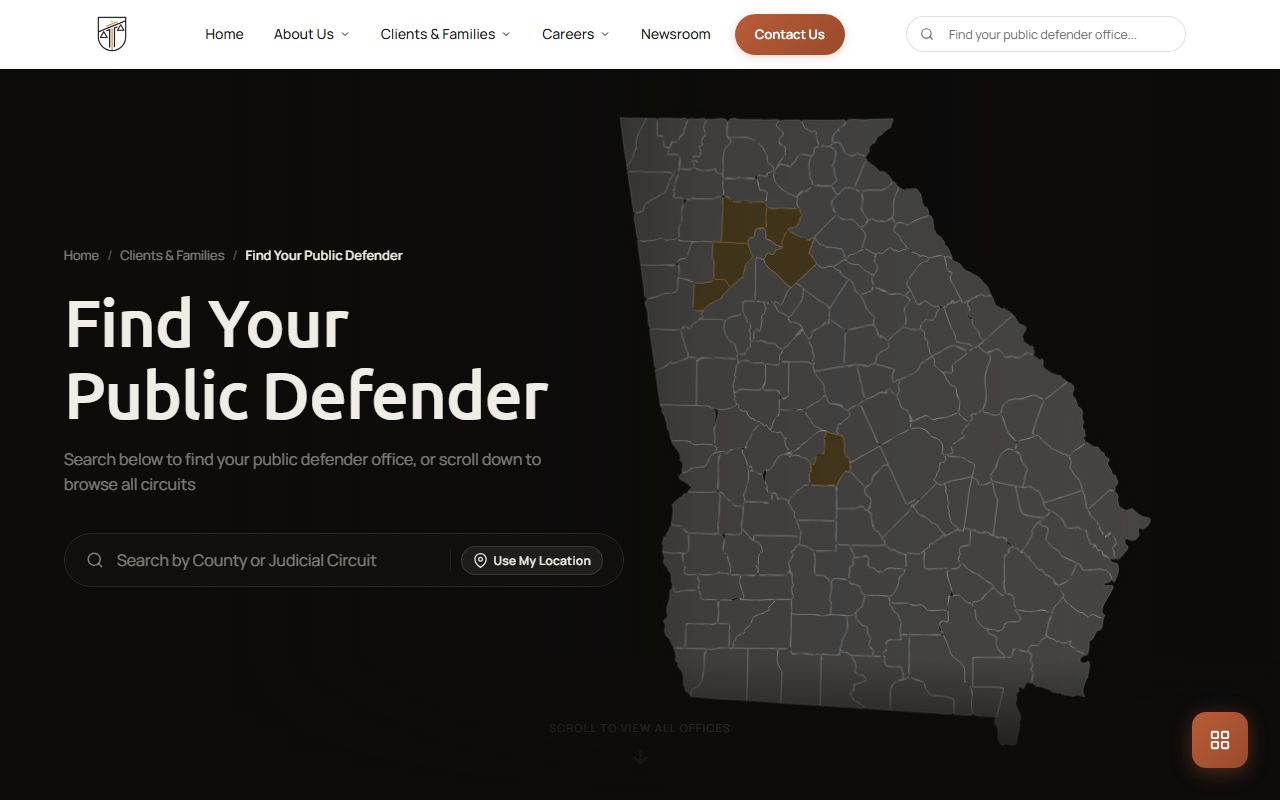
Public defender details help readers understand that criminal court records can reflect both prosecution and defense activity, including appearances, motions, pleas, and sentencing.
Macon County Charges vs Convictions
A charge is an allegation. A conviction is a final result after a guilty plea, guilty verdict, or other conviction entry. Macon County criminal court records may show charges that were changed, reduced, dismissed, or not proved. Reading only the first charge line can misstate the record. The disposition and sentence fields are the key fields for deciding what happened to each count.
| Point | Charge | Conviction |
|---|---|---|
| Meaning | An alleged offense filed through a warrant, accusation, indictment, or complaint. | A final court result finding guilt or accepting a guilty plea. |
| Record stage | Appears early and may change as the case develops. | Appears after plea, verdict, or other final case action. |
| Proof level | May begin from probable cause or prosecutor charging judgment. | Requires proof, plea, or final court acceptance. |
| How to read it | Check status, amendments, and dismissal entries. | Check disposition, sentence, and probation terms. |
Public Access for Macon County Criminal Records
Georgia public access starts with the custodian. Superior Court criminal case files are handled by the Clerk of Superior Court. Magistrate Court handles warrant and first-stage criminal records. Sheriff incident reports and jail records go through the Sheriff's Office. The Macon County open-records page says requests may be oral or written, but written requests help document the names, dates, times, places, case numbers, record type, and return contact details. If fees apply, the county says the requester is contacted before processing.
Key access rules:
O.C.G.A. 50-18-70 et seq. treats Georgia public records as open unless a specific exemption applies.
O.C.G.A. 50-18-72 is cited by the Sheriff's Office for law-enforcement report exemptions and redactions.
O.C.G.A. 35-3-37 governs Georgia criminal-history record restriction for qualifying records.
Incident reports are not the same as criminal court records. The Sheriff's Office report page says an authorized requester needs a case number, identifying information, a Statement of Need form, government photo ID, and $0.25 per page when a report can be released. Sensitive data is redacted, and some reports require a court order or investigating officer approval.
The Southwestern Circuit public defender office page lists office hours and counties served, including Macon County.

That public defender source is useful when a case file shows appointed counsel or when a defendant needs to ask how defense records differ from public court records.
Macon County Sealed and Restricted Records
Georgia uses record restriction for some criminal-history material. Restriction does not mean every court file is destroyed. It limits public criminal-history dissemination for qualifying records, while criminal-justice agencies and judicial officials may still see information. For arrests after July 1, 2013, GBI says there is no application process and the person should contact the prosecuting attorney. For older arrests, the person starts with the arresting agency.
| Point | Sealed or access-limited court file | Georgia record restriction |
|---|---|---|
| Main effect | Public access to a court file is blocked or limited by law or court order. | Public criminal-history dissemination is limited for qualifying records. |
| Who may still see it | Courts, parties, agencies, or people allowed by law or order. | Criminal-justice agencies and judicial officials may retain access. |
| Where to start | The court that controls the file and the clerk that maintains it. | The prosecutor for post-2013 arrests or arresting agency for older arrests. |
| Macon County tie | Superior Court or Magistrate Court may control access to the court file. | The Southwestern Judicial Circuit District Attorney may review eligible prosecutor approvals. |
Juvenile, adoption, mental-health, personal identifying information, and pending law-enforcement material must not be treated as ordinary public criminal court records. The clerk does not display scanned filing images online because filings can contain sensitive identifiers. Sheriff reports are redacted when required by law.
The GBI record restriction page is the state source for Georgia criminal-history restriction rules.
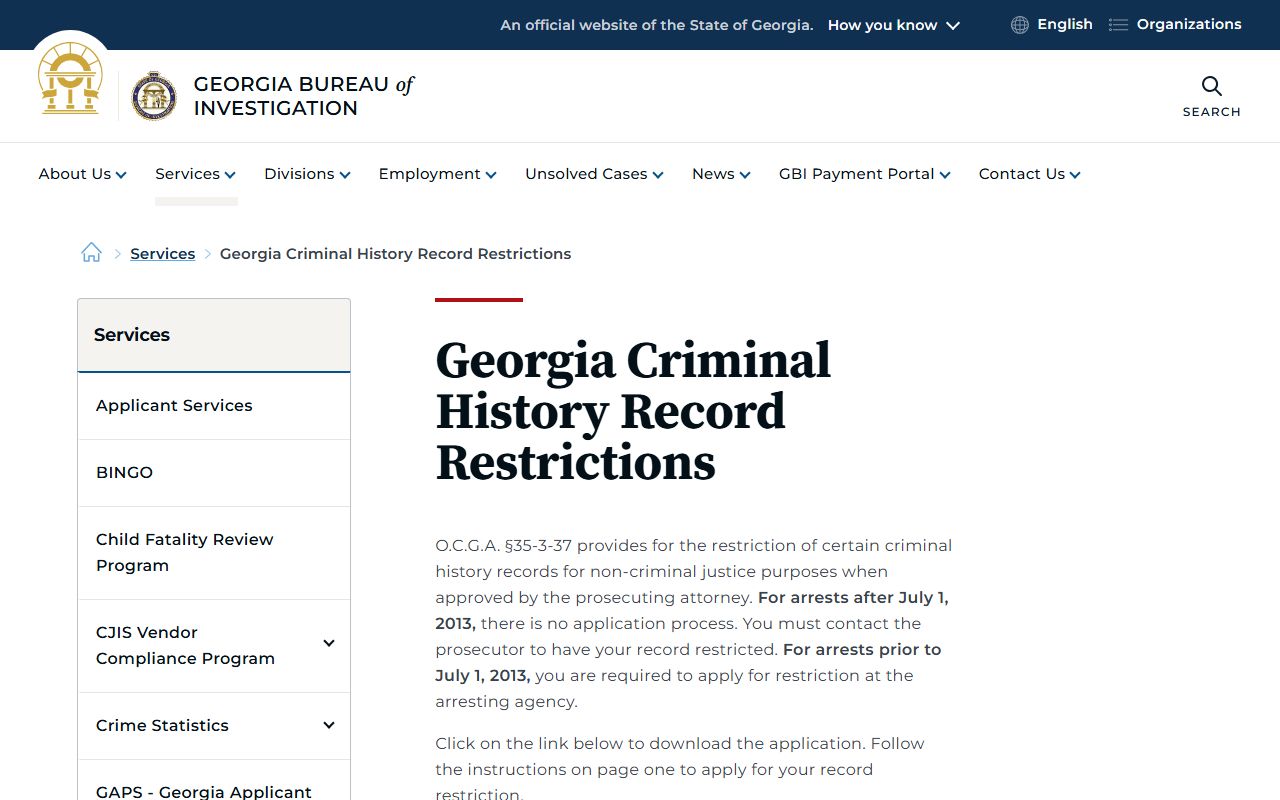
That distinction is critical for Macon County criminal court records because a restricted criminal-history entry may still leave court or agency records available to authorized users.